
Anna's Almanac: November

Honouring ancestors and divining the future
When I think ‘November’, I see it covered in ash. Is it because it’s grey and lifeless (at least on the surface)? Or is it because it reminds us of the passing of time and those who lived before us? Sometimes all that’s left is an inscription on a gravestone. Date of birth, date of death. Ashes of the bonfires long extinguished.
Despite that, I’m rather fond of Novembers – the leaves are still clinging onto the branches, there are some splending sun rises and sunsets and it’s not without some jolly celebrations.
And the season for ghost stories continues. With its focus on remembering the dead and turning to the past, November is a month for ghosts.
Slavic answer to Halloween
Have you ever heard about Dziady? Contemporary articles like to call it the Slavic Halloween. We know very little about how it had been celebrated. In truth, nobody in Poland would probably know much about it, had it not been for a romantic drama titled Dziady by Adam Mickiewicz, which we all had to read at school.
Dziady (from Belarusian Дзяды ‘ancestors’) translates as ‘the Forefather’s Day’. It was an ancient pagan feast celebrated in Eastern and Northern Slavdom twice a year, in the spring (April/May) and in the autumn (October/November). When we talk about Dziady now, if we talk about it at all, it is usually in relation to the autumn traditions that preceded the Christian celebrations observed nowadays, the All Saints Day (1st Nov) and the All Souls Day (2nd November).
Contemporarily, it’s the time to remember the our dead, to pray for the peace of their souls and to light candles on their graves.
Hundreds of years ago, Slavs and Balts welcomed their ancestors to earth at this time of the year. They left food and drink (including strong spirits) on their graves or in the villages, and families gathered to feast. People made sure that crumbs and leftovers had not been cleared away so the spirits could sustain themselves. Special care was taken to speak quietly and move gently, not to frighten the souls.
It was important to not to offend the spirits of the dead. For ancient Slavs, they influenced the harvest, gave fertility and generally brought prosperity to the communities of their living descendants. People made efforts to guide the spirits home and to treat them with reverence in this special time of the year when the veil between the worlds had thinned.
To guide the spirits to their earthly abodes, people lit bonfires. Those beacons were also a source of warmth for the spirits of the dead who suffered cold in the impenetrable dimensions of the afterlife. So here, at last, we come to a link with the modern Polish tradition of lighting candles on the graves on the 1st November.
The fires were also lit at crossroads to ward off evil spirits or demons that might have slipped through the veil with those who came to visit their old homes. All sorts of beings could roam in the darkness. Better to be cautious…
St Andrew’s Day revelry
November, dark, wet and windy, is not a favourite month amongst many people living in the north of the globe. I quite like it – the progress of darkness doesn’t bother me and I love the fairy light that decorate houses and gardens. Much as the beginning of the month is about remembrance and reflation, the end brings a day of celebration – St Andrew’s Day (30 November).
Saint Andrew is a patron saint of Scotland. His relics, including a tooth, some fingers, arm bones and a kneecap, had been brought to Scotland by St Regulus in the early 12th century. The Scottish flag bears white St Andrew’s cross on a blue field. St Andrew’s Day, a public holiday in Scotland, is spent celebrating all things Scottish – from whisky and haggis to music and stories.
But Saint Andrew is also believed to look after fishermen, travellers and sailors. He is the one to turn to when trying for a baby or looking after a husband. And this aspect of the saint is the focus of Polish folk traditions, Andrzejki.
St Andrew’s Day and, less commonly, St Catherine’s Day (24 November) were the occasions for the last parties before entering a period of fasting. And for divining future, especially the identity of future spouses. Girls played various fortune-telling games and believed that they would see their intended in dreams.
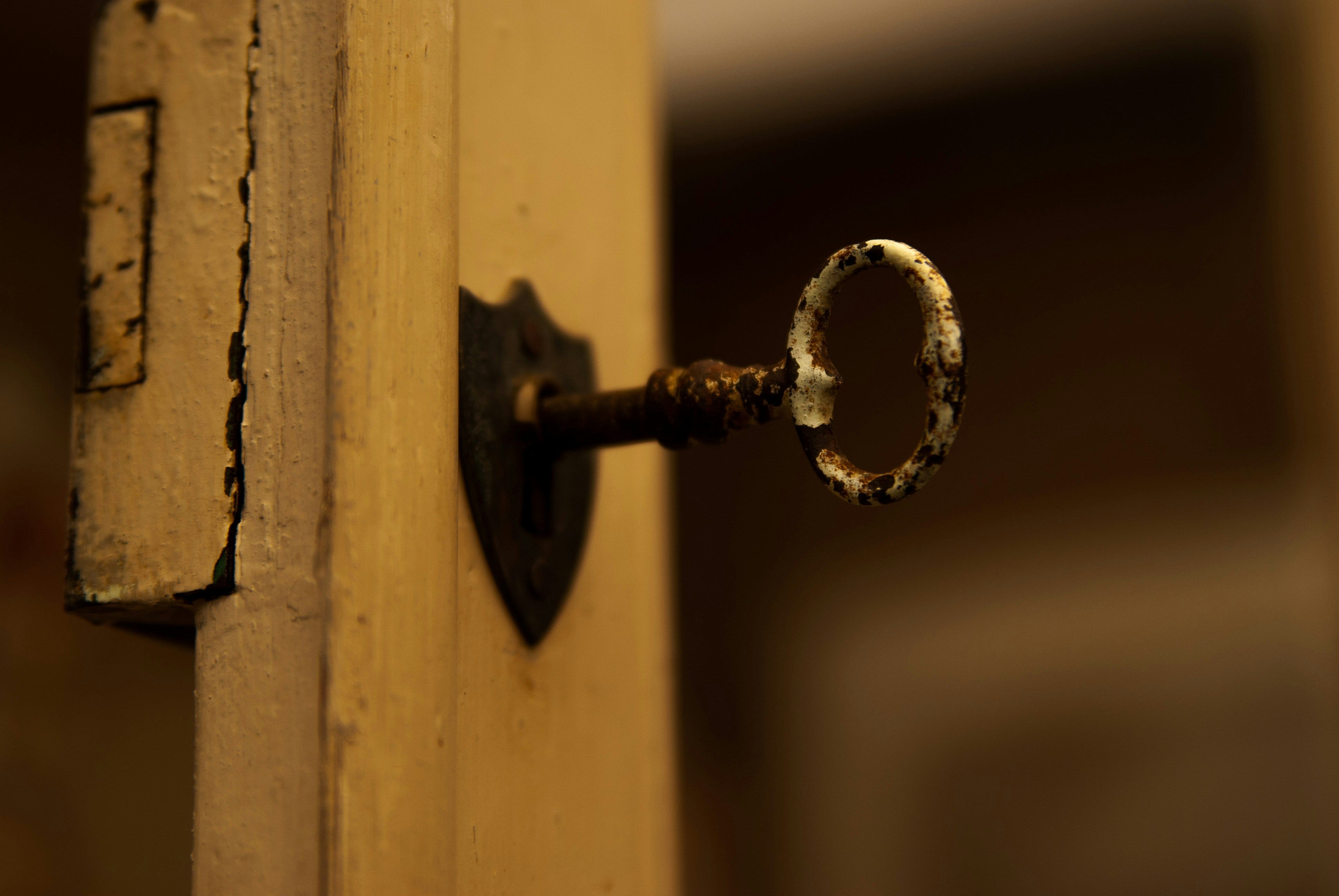
Unlock the secrets of your future on St Andrew’s night
You need a bowl of water, some wax and an old-fashioned skeleton key with a hole. Heat the wax until it’s melted and then gently pour some of it through the hole in the key into the water. Let it solidify into a shape. Once it can be handled, lift your wax shape out and hold it in front of a light source – a candle or a night lamp – so it casts a shadow on a wall. What does it look like? A heart? A tool? An animal? Turn it around and let your imagination work. Whatever you see, it holds a secret to your near future. (I’m hoping mine will look like a book that I’d like to publish in 2026).
The evening of 30 November, with its magic, games and fun, marks yet another passage of the winter season – the beginning of Advent. The period preceding Christmas, for traditional communities, was a time of fasting and prayer, of candles lit in the morning, of hopeful waiting for the birth of the Light…
Poem of the month
There’s a poem by Zbigniew Herbert, one of the greatest Polish 20th century poets, that I associate with November. I haven’t found an English translation so here is my humble attempt for all to enjoy.
Late autumn poem of Mr Cogito intended for women’s magazines
The time of falling apples the leaves are still resisting
in the mornings the mists are heavier the air is going bold
the last grains of honey the first red of the maples
a killed fox in the field a space shot through
the apples will descend underground the trunks will come to your eyes
the leaves will get shut in chests and the wood will speak
you can now hear clearly the sound of rolling planets
the high moon is rising let your eyes take the cataract
Some dates to remember this November
1 November - All Saints’ Day
2 November - All Souls’ Day
5 November - full moon (Full Beaver Supermoon)
27 November - U.S. Thanksgiving Day
30 November -the Day of St. Andrew the Apostle
Who’s taking part in Novel November? It not much difference to me as every month is a novel writing month 😊. But good luck to all who take up the challenge. May it be a fruitful month. I’m hoping to make some solid progress with editing my regency fantasy romance.
If you’d like to follow me on my writing journey, check out for updates on my Instagram profile.
Polish proverb
Jeśli kret w listopadzie jeszcze późno ryje, na Nowy Rok komar wpadnie w bryję - If in late November a mole makes hills, a mosquito will fall into mud puddle on New Year’s Day.
If you have a November story, reflection or reading recommendation to share, please leave a comment.
And if you liked reading Anna’s Almanac, please spread the word and help me reach more readers.
Happy November and let’s meet next month!
(Photos Unsplash)
I’d never heard of Dziady before, and I’m so glad you shared it. How fascinating that it echoes Día de los Muertos in Mexico, another celebration that remembers not with fear but with love, colour, and a sense of belonging. Both are such beautiful reminders that remembrance is also a celebration of life and family.
I’ll be trying the St Andrew’s ritual too, and hoping, like you, that the wax will take the shape of a book.
November has always felt special to me, nestled between the vibrancy of autumn and the stillness of winter, a month for reflection and for honouring our quiet connections with those who came before us.
Your translation of Zbigniew Herbert’s poem moved me deeply; you should share more of his work. There’s music in it, the kind I hear when the leaves fall and the wind begins to sing. November truly is a quiet concerto.
It is good to remember what was before us. The long continous line of lives filled with love, work, struggles and laughter. To think we're all the same despite different circumstances of the changing eras. 🍂🕯